How to Choose the Best Football Artificial Grass for Your Field?
Choosing the right Football Artificial Grass is crucial for any field. As industry expert Sarah Johnson states, “The quality of artificial grass can make or break a game.” Selecting the best grass impacts player performance and safety.
When considering options, think about the grass’s durability and surface texture. Some types may look appealing but wear out quickly. Others might feel great but lack the right drainage. These factors can greatly affect the field's usability and player satisfaction.
Research different brands and product reviews. Pay attention to player feedback and installation processes. It’s vital to balance aesthetics, functionality, and cost. A poorly chosen surface can lead to problems later on. Making the right decision today ensures a better playing experience tomorrow.
Understanding the Different Types of Football Artificial Grass Available
When selecting artificial grass for football fields, it's crucial to understand the various types available. There are three main categories: tufted, monofilament, and slit-film. Each type offers unique benefits and drawbacks. Tufted grass is popular due to its affordability. It provides a decent playing surface but may wear out quicker than other types.
Monofilament grass consists of individual strands that mimic natural turf. This type is durable and can withstand heavy usage. It also offers a more realistic feel. However, its initial cost can be higher. Slit-film grass is another option. It features flat, ribbon-like fibers, providing good performance. But, if not installed correctly, it can become matted or lose shape.
When choosing, consider factors like play frequency and climate. A field that hosts numerous games will require a more robust option. Areas with intense sunlight may also affect longevity. Many factors are essential in the decision-making process. It's essential to analyze your specific needs before purchasing.
How to Choose the Best Football Artificial Grass for Your Field?
| Type of Grass |
Infill Material |
Pile Height |
Durability (Years) |
Ideal Use |
| Nylon Grass |
Rubber |
2 inches |
8-10 |
Competitive Play |
| Polyethylene Grass |
Sand |
1.5 inches |
6-8 |
Recreational Use |
| Polypropylene Grass |
Cork |
1 inch |
4-6 |
Kids’ Play Areas |
| Multi-Sport Grass |
Blend of Sand and Rubber |
2.5 inches |
7-9 |
Versatile Use |
Key Factors to Consider When Selecting Artificial Turf for Football
When selecting artificial turf for football, several key factors come into play. The type of turf affects the game greatly. Look for a product that provides a balance between durability and performance. Height of the grass blades is crucial. Longer blades often enhance playability, but they may wear out quicker. Consider your climate too. A turf that performs well in one environment might not do so in another.
Infill material can impact both performance and safety. Rubber and sand are common choices. Each has distinct pros and cons. Rubber provides better shock absorption. However, it can retain heat, making the surface hotter. Think about maintenance as well. Some turfs require regular brushing or infill replacement. If that seems daunting, choose a low-maintenance option.
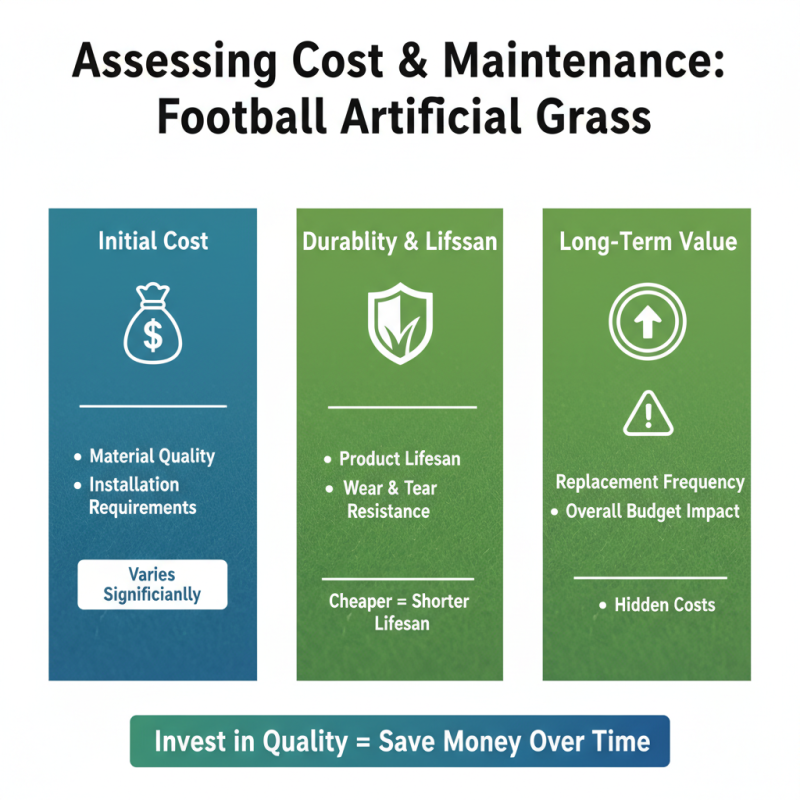
Don’t forget the installation process. A poorly installed field can lead to uneven surfaces and create hazards. It's beneficial to consult with an expert before making a final decision. Also, budget constraints could force compromises. Sometimes, the cheapest option may lead to regret. Reflect on your long-term needs rather than just immediate costs. It's about finding the right balance.
Evaluating Durability and Performance of Artificial Grass for Football Fields
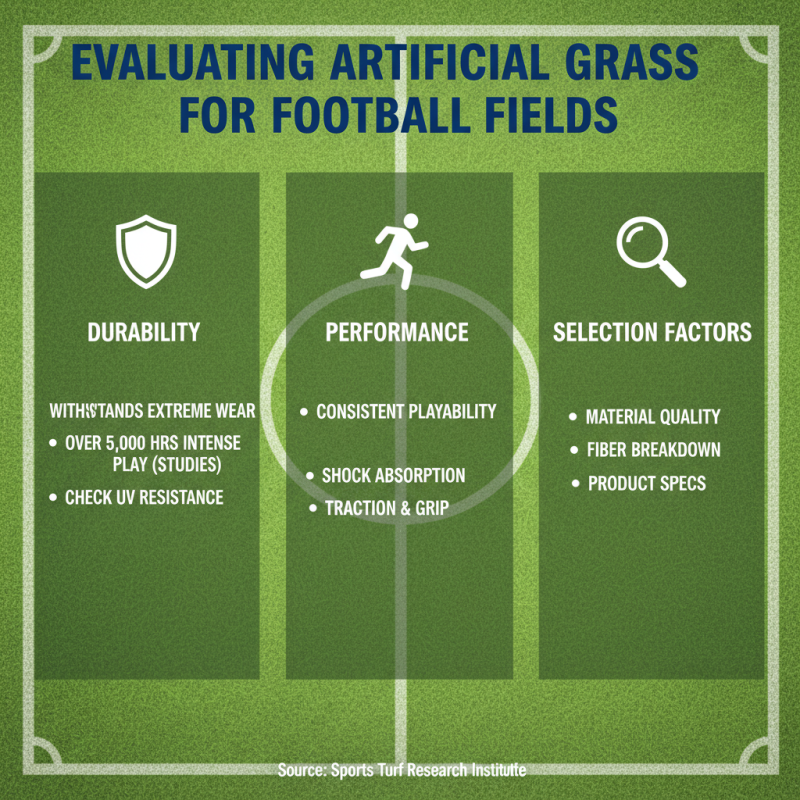
When selecting artificial grass for football fields, durability and performance are critical factors. Studies show that top-quality football turf should withstand extreme wear. According to the Sports Turf Research Institute, lasting materials can endure over 5,000 hours of intense gameplay. Yet, not all turfs consistently deliver this longevity. Some fibers break down quicker than expected due to poor UV resistance. Always check product specifications carefully.
Performance metrics are just as important. A field's ability to drain water influences game quality. Fields should ideally have a drainage rate of 30 inches per hour. However, many do not meet this standard. Inadequate drainage can lead to playing conditions that are unsafe and frustrating for athletes. Players might experience sliding and unanticipated injuries. Consider also the infill materials. Rubber and sand options provide different levels of cushion and support.
Look for certifications. The FIFA Quality Programme provides useful benchmarks. However, even certified products can vary in performance. Customer reviews often reveal inconsistencies. Installation impacts playability as well; poor installation can negate even the best product's advantages. Thus, evaluate every aspect closely. Your choice could significantly affect both the game and the players’ experiences.
Finding the Right Installation and Warranty Options for Your Turf Choice
When it comes to artificial grass for football fields, installation and warranty options are critical factors. The quality of installation greatly affects the longevity and performance of the turf. A professional installation typically requires a properly prepared base, drainage systems, and secure seam joining. According to industry reports, up to 30% of artificial turf issues stem from improper installation. Therefore, investing in experienced installers can save future costs and headaches.
Warranties vary greatly among products. Some may offer 5 years, while others can extend up to 15 years. It's essential to understand what the warranty covers. Some warranties only cover defects and exclude damage from improper installation. Always consider the terms before signing anything. Check online for reviews. Poor installation can lead to bubbling and uneven surfaces. It can also shorten the lifespan of the turf.
Tip: Ask for references from installers. Talk to previous clients about their experiences.
Tip: Read fine print on warranties. Many policies have exclusions that can surprise you later.
In the end, choosing the right installation and warranty options can be as vital as selecting the turf itself. Consider both aspects seriously to ensure a smart investment.